Improved food security & nutrition
Increased household vegetable consumption, better dietary diversity, and improved health outcomes across the wards we serve.
Every WOHEEA programme is measured. Numbers below are drawn directly from the field — community trainings, school nutrition clubs, and partner-funded projects in the Arusha region.
Increased household vegetable consumption, better dietary diversity, and improved health outcomes across the wards we serve.
Skills training, business mentorship, and microfinance enabling women to start and grow businesses that support their families.
Stronger community awareness on maternal health, family planning, and gender equality — empowering women to make informed choices.
Savings groups, business partnerships, and advocacy networks where women support one another long after a programme ends.
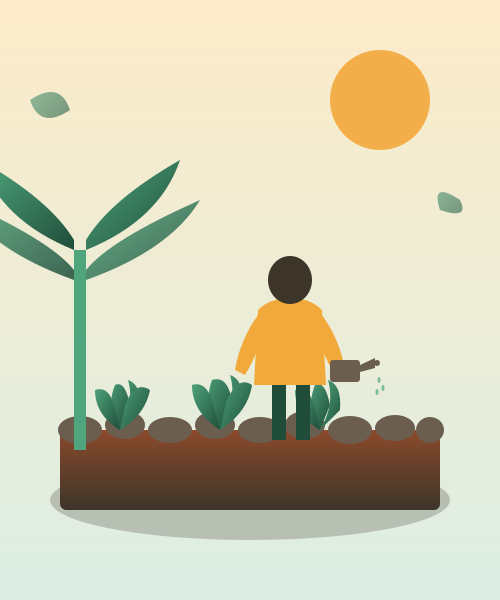
Kelvin Rajabu is a 12-year-old student at Engosengiu Primary School in Arusha — and an active participant in the Vegetables for All ecosystem. Armed only with seeds and the nutritional literacy gained at his school club, he autonomously designed, built, and managed a home garden.
He physically built the stone bed himself. He manually retrieves water from a local well twice a day — morning and night. And he has successfully cultivated nutrient-dense crops including spinach and bananas.
A 12-year-old is making nutrition profitable for his family. That is the goal of every WOHEEA programme — not aid received, but agency exercised.